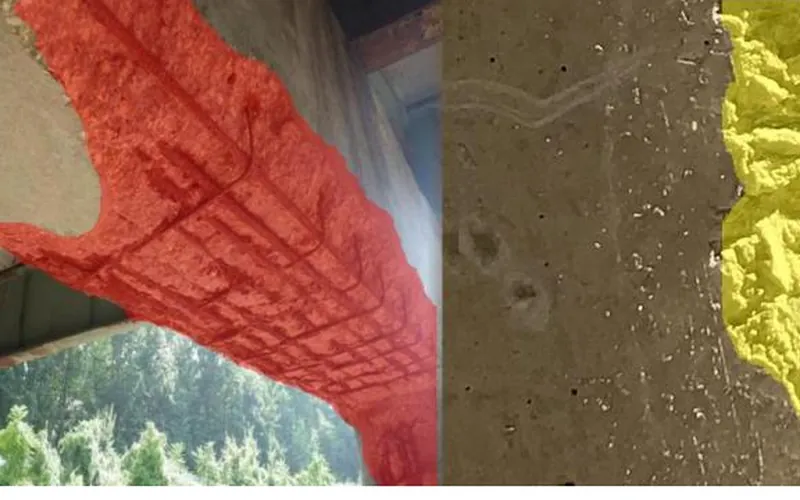
Infrastructure inspection · South Korea
Concrete defect segmentation
One model outlines five kinds of concrete damage, so inspectors measure defects instead of eyeballing photos.
Result: 5 damage classes · 5 models benchmarked
View case studyIndustry guide
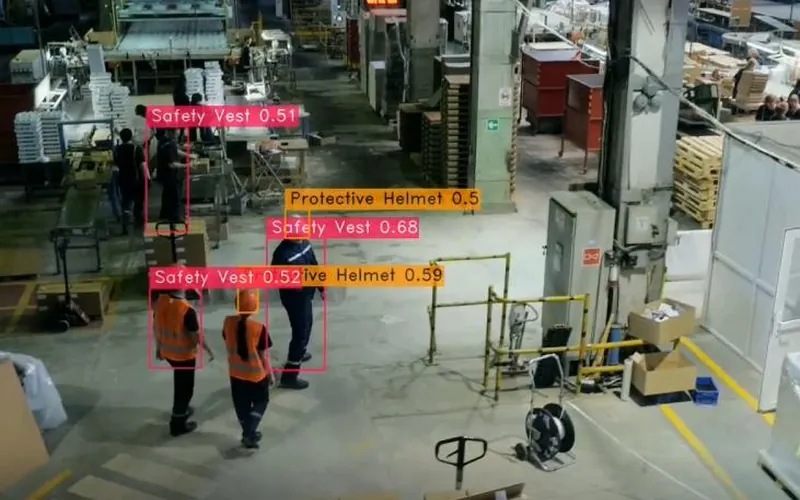
Find defects, safety violations and counterfeits automatically, in the images your cameras and scanners already capture.
The problem
Inspectors scan photos and video by eye. It’s slow, inconsistent between people, and hard to audit.
A hairline crack is a few pixels wide; spalling covers large irregular areas. Rare classes are exactly what naive models miss.
Lighting, angles, motion blur and clutter on the line or the site, plus hardware limits on what can run where.
What we build
Every build is scoped against a metric you can rerun yourself, and you own the code and models.
Pixel-level masks show where a defect is and how far it extends, so you measure instead of flagging.
Detectors that check protective equipment from ordinary site cameras, so safety teams respond to violations instead of watching every feed.
Fine-grained classifiers that separate genuine from counterfeit, or pass from fail, with decision thresholds tuned to the real cost of a wrong call.
Models sized for your constraint: GPU server, industrial PC or embedded device, with human-in-the-loop review queues.
Relevant work
Our concrete-defect model for a scanner platform solves the same problem as visual quality control on a manufacturing line: small, rare defects in variable imagery, measured at the pixel level.
Infrastructure inspection · South Korea
One model outlines five kinds of concrete damage, so inspectors measure defects instead of eyeballing photos.
Result: 5 damage classes · 5 models benchmarked
View case studyIndustrial safety
Site cameras check seven types of protective equipment automatically, so safety teams don’t have to watch every feed.
Result: 7 PPE classes · 2.3k training images
View case studyRetail · brand protection
Automated first-line screening of genuine vs. counterfeit logos for brand-protection teams and resale platforms.
Result: 94.8% AUC-ROC · 94.0% F1 (brand A)
View case studyEngagement options
Scope first, build only if the numbers say it’s worth it, and add Operate if you’d rather we run it.
Fixed price · 1 to 2 weeks
We study your data and workflow, agree on the metric that defines success, and give you a fixed quote for the build.
Fixed price · prototype in 2 to 6 weeks, then production
A working prototype on your real data, then hardening, deployment and handover to your team.
Monthly · cancel with 30 days’ notice
We keep your system accurate, current and cheap to run, so your team doesn’t have to.
Common questions
Often fewer than teams expect. With modern pretrained models and careful augmentation, useful prototypes often start from hundreds of labeled examples, not tens of thousands, and the labeling plan is part of the engagement.
Usually yes. We profile your target (GPU server, industrial PC or edge device) and choose or compress models to fit its speed and memory budget.
We never promise a number before seeing your data. Scoping includes a quick feasibility pass on your imagery, so expectations are set from evidence, not sales copy.
Start a project
Two or three sentences about the data you have and the outcome you want is enough. We reply within 1 business day with an honest read on feasibility. No slide deck needed.