Business result
Inspectors see exactly where damage is and how far it extends, for five damage types, from a single model. Manual photo review becomes a measurable, repeatable output for the scanner platform.
Client type
Client project for a South Korean company
Where this applies for you
Manufacturing quality control, infrastructure inspection, and any line where people review images one by one.
Technical result
- 5damage classesEfflorescence, rebar exposure, spalling, break and crack
- 5architectures benchmarkedSegFormer, YOLOv8, U-Net, DeepLabV3 and EfficientNet
- Pixel-levelmasksShape and extent of each defect, not just its presence
The problem
Structural inspection of bridges, piers and walls relies on people reviewing images by eye. The damage types look nothing alike (a hairline crack is a few pixels wide, spalling covers large irregular regions, efflorescence is a pale stain) and the scanner platform needed one model that handles all of them.
What we built
We framed the task as multi-class semantic segmentation, so every pixel is assigned a damage class and the output can be measured, not just flagged. Five architectures (transformer, single-stage detector and encoder-decoder families) were trained and compared on the client’s imagery to find the best trade-off for the scanner.
Workflow
How it works, step by step.
The pipeline in 5 stages, from capture to inspect. Each stage has a clear input, a clear output and a reason to exist.
- 01
Capture
Surface imagery of concrete structures from the GPR & vision scanner.
- 02
Label
Pixel-level annotation of five damage classes, including thin structures like cracks.
- 03
Benchmark
SegFormer, YOLOv8, U-Net, DeepLabV3 and EfficientNet trained and compared on the same data.
- 04
Segment
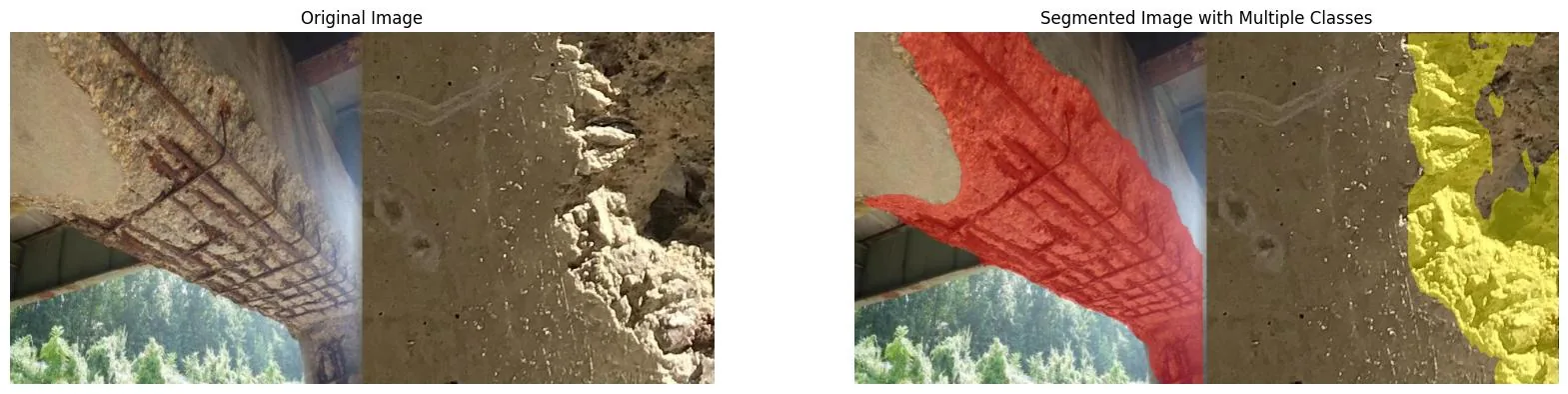
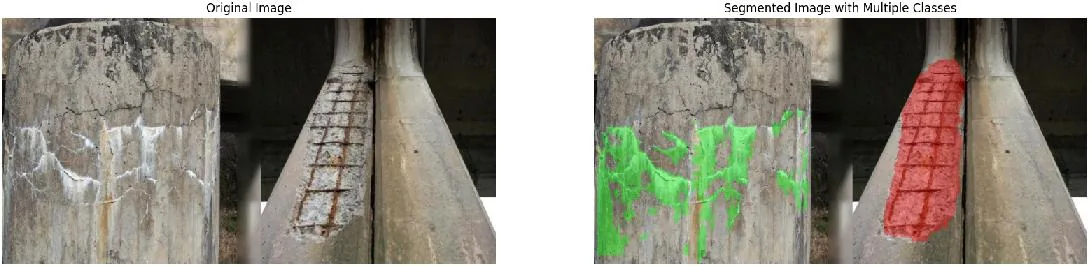
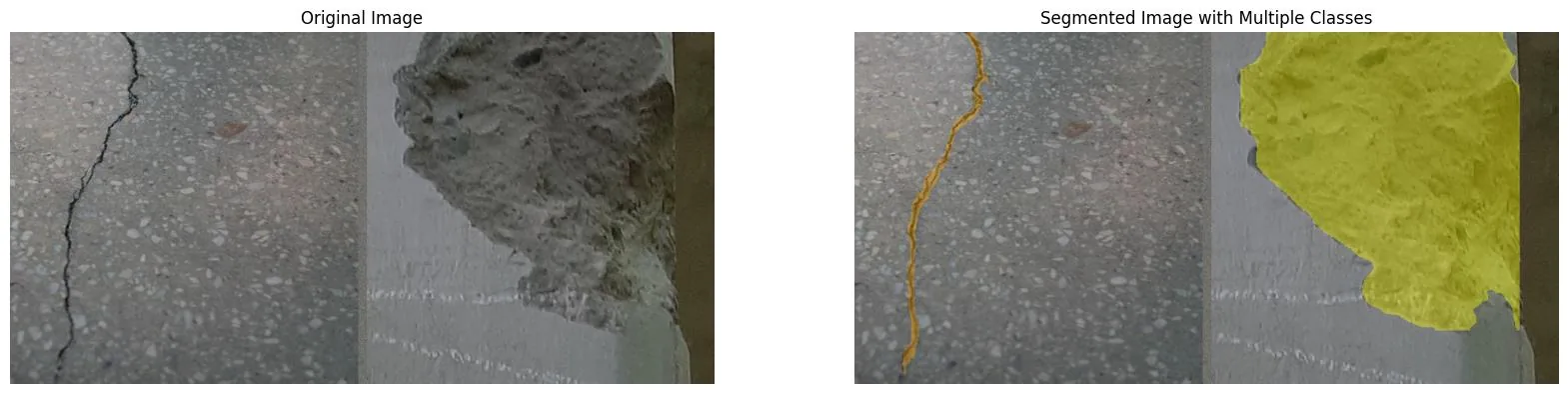
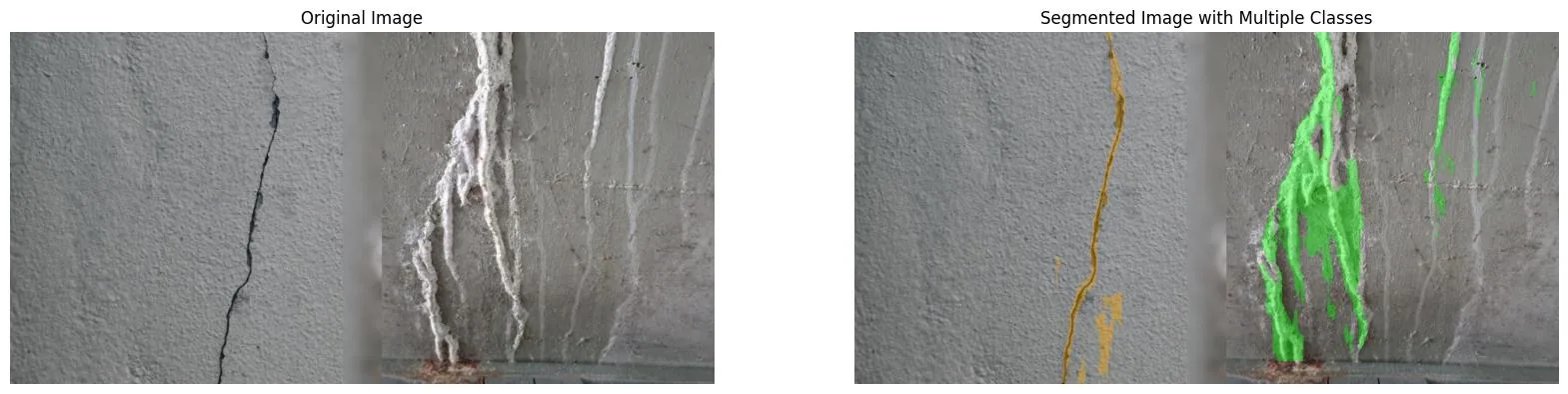
The selected model outputs a color-coded mask per damage class for every image.
- 05
Inspect
Overlays show inspectors where damage is and how far it extends, ready for reporting.
Results
What it produced.
- Rebar exposure
- Spalling
- Efflorescence
- Crack
Stack & techniques
- Semantic segmentation
- SegFormer
- YOLOv8
- U-Net
- DeepLabV3
- EfficientNet
- Python
Delivered by members of the Saerosense founding team. Client names are withheld unless public. References are available on request.
Related service
Start a project
Have a similar problem?
Send a few lines about your data and the outcome you want. We reply within 1 business day with an honest read and a proposed scoping plan.