- 3DU-NetVolumetric segmentation, not slice by slice
- 4D → 3DpreprocessingMulti-modal volumes into 3D voxel patches
- Soft Dicemulti-class lossKeeps small tumor regions from being ignored
The challenge
Tumor tissue occupies a small fraction of a brain volume, and manual delineation across hundreds of slices is slow and varies between readers. Models trained naively learn to predict background.
Our approach
Multi-modal 4D MRI was preprocessed into 3D voxel patches, and a 3D U-Net was trained with a multi-class soft Dice loss so small tumor regions carry their proper weight in training.
Workflow
How it works, step by step.
The pipeline in 4 stages, from load to segment. Each stage has a clear input, a clear output and a reason to exist.
- 01
Load
4D multi-modal MRI volumes with expert ground-truth labels.
- 02
Preprocess
Volumes standardized and cut into 3D voxel patches.
- 03
Train
3D U-Net optimized with a multi-class soft Dice loss.
- 04
Segment
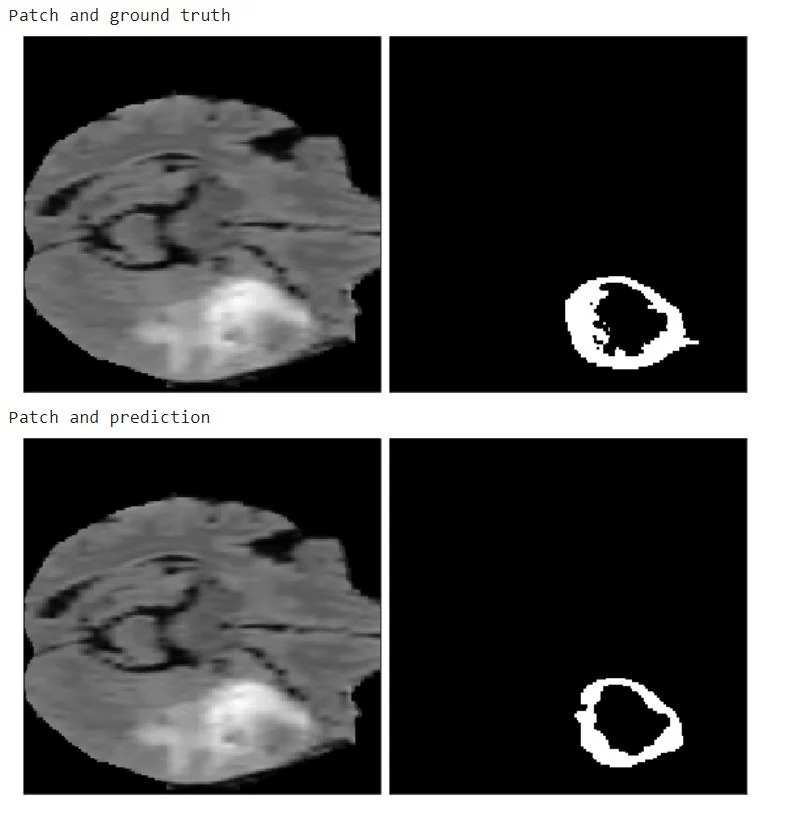
Predicted tumor masks compared against ground truth.
Results
What it produced.
Stack & techniques
- 3D U-Net
- Soft Dice loss
- MRI preprocessing
- Python
Delivered by members of the Saerosense founding team. Client names are withheld unless public — references are available on request.
Related service
Start a project
Have a similar problem?
Send a few lines about your data and the outcome you want. We reply within two business days with a feasibility read and a proposed scoping plan.